



“Plumber near me” is not really a keyword. It is a shorthand the phone understands, and the answer it produces is different for a homeowner standing in a flooded basement in one suburb than for someone twelve miles away. That single fact explains why near-me searches cannot be won with keywords, and why most contractors are invisible for them three towns over.
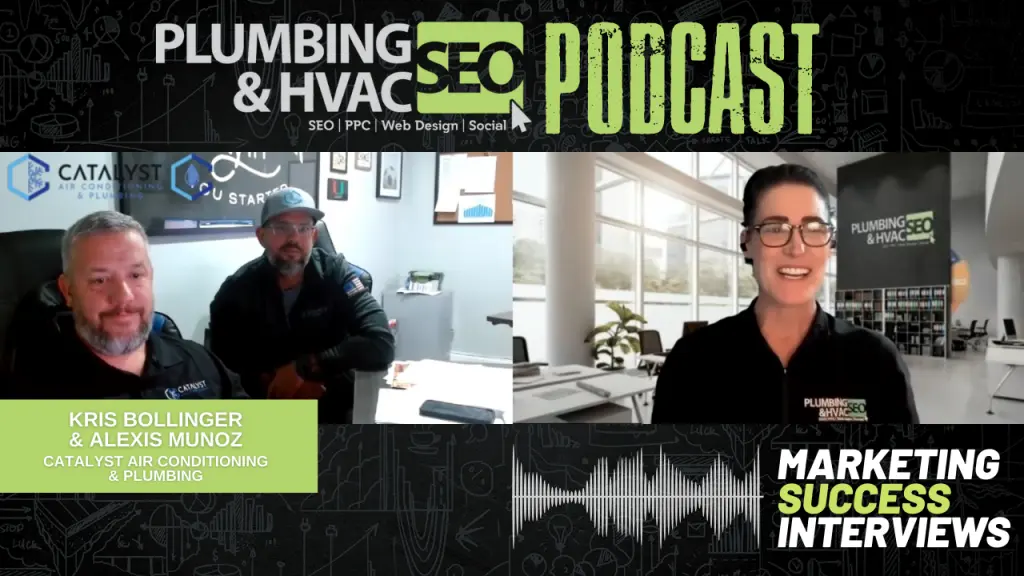
Watch the training: the Google Maps playbook
Josh Nelson walks through the map pack factors that decide every near-me search in your market.
What Google actually does with “near me”
Google strips the phrase and replaces it with the searcher's location. “Plumber near me” becomes, in effect, “plumber within a few miles of this phone right now.” The results are then assembled from three things Google has been weighing for local search for years:
- Proximity — how close your verified business address is to the person searching. This is the heaviest factor in near-me results and the one you cannot buy your way around.
- Relevance — how clearly your Google Business Profile, website and content say that you do this specific service in this specific area.
- Prominence — reviews, citations, links, brand searches and general authority. This is the factor that lets a strong company outrank a closer weak one.
Proximity dominating is the part contractors find hardest to accept. You can be the best plumbing company in the county and still not appear for someone searching from the far edge of your service area, because a competitor two miles from that phone is simply closer. Near-me visibility is therefore not one ranking — it is thousands of different rankings, one for every point on the map.
Why your rank checker lies to you. A single-point rank check tells you where you rank at one location, usually your own office — where you always look great. What matters is the grid: your position measured at dozens of points across your service area. That is the map we build for every client, and it is usually the first time an owner sees how quickly their visibility falls off two towns out.
The near-me searcher is your best lead
Someone typing “plumber near me” is not researching. They have a problem now, they are on a phone, and they are going to call one of the first three results. These searches convert at a rate that makes almost every other traffic source look leisurely — which is exactly why the map pack is worth fighting over.
It also means the near-me family is bigger than the phrase itself. Every one of these behaves the same way and is won the same way:
- plumber near me, plumbers near me, emergency plumber near me
- drain cleaning near me, water heater repair near me, sewer line repair near me
- HVAC repair near me, AC repair near me, furnace repair near me, HVAC company near me
- electrician near me, emergency electrician near me
- 24 hour plumber near me, plumber open now, plumber near me open on Sunday
- and the voice-search versions of all of the above, which is increasingly how they arrive
How to actually win them
1. Your Google Business Profile is the ranking asset, not your website
Near-me results are map results. The profile does the ranking; the website supports it. That means the primary category must be exactly right (“Plumber”, “HVAC Contractor”, “Electrician”), the secondary categories must cover your real services, the service list must be populated properly, and the profile must carry real photos, current hours — including whether you are genuinely open now — and consistent contact details. A thin profile cannot be rescued by a good website.
2. Reviews are the lever you control
Review count, rating and velocity are the strongest prominence signals available to a contractor, and they are the only competitive advantage in this trade that compounds. When two companies are roughly equidistant, reviews decide it. This is why reputation management is a ranking strategy and not a customer-service nicety.
3. Build real pages for the towns you actually serve
Proximity is fixed, but relevance is not. A substantive page about your work in a specific town — the neighborhoods, the housing stock, the local water conditions, the jobs you have done there, photos of your trucks there — extends how far your relevance reaches from your address. What does not work is the mass-produced approach: forty pages identical except for the town name. Google has been discounting those for years, and they now actively signal a low-quality site. Ten real pages beat a hundred templated ones.
4. Get your NAP consistent everywhere
Google corroborates your location against the rest of the web. Conflicting addresses, old suite numbers and stale phone numbers across directories quietly undermine the proximity signal you depend on. See the citations and NAP consistency guide for the cleanup process.
5. Answer “open now” honestly and completely
A large share of near-me searches happen outside business hours, and Google filters by whether you are open. If you genuinely run 24-hour emergency service, your hours must say so — and someone must actually answer. If you do not, do not claim it; the one-star review from an unanswered 2am call costs more than the lead was worth.
6. Make the phone call effortless
Near-me traffic is mobile and impatient. A tap-to-call number in the header, a page that loads in under two seconds, no interstitial, and a form that asks for three fields rather than nine. Winning the ranking and losing the visitor is the most expensive mistake in local search.
7. Add structured data and service-area markup
Proper LocalBusiness and service markup helps search engines and AI assistants connect your business to the services and areas you serve without guessing. The schema markup guide covers exactly what contractors should implement.
If you are outside the city you want
This is the most common version of the problem: your shop is in a suburb and the money is downtown, or one town over. Proximity is working against you and no amount of on-page work changes your address. The honest options, in order of how well they work:
- Out-earn the distance on prominence. Enough review volume, authority and relevance will push you into results further out than proximity alone would allow. Slow, durable, and the only fully legitimate organic answer.
- Open a real location. A staffed office in the target market — genuinely staffed, with its own verified profile. Effective and expensive, and Google is aggressive about suspending anything that is a mailbox rather than a business.
- Buy the coverage. Local Service Ads and Google Ads sit above the map pack and are not bound by proximity in the same way. This is the fastest way into a market where you are geographically disadvantaged, and it is usually what we run while the organic work compounds.
What does not work, and what we will not do: fake addresses, virtual offices, keyword-stuffed business names, or registering at an employee's house. These get profiles suspended, and a suspension costs more than the ranking was ever worth.
How to know if you are actually winning
- Grid rankings, not single-point rankings. Where do you place at 30 to 50 points across your service area, tracked month over month? This is the only honest measure of near-me visibility.
- Calls from the Google Business Profile, tracked separately from website calls.
- Direction requests, which are near-me intent in its purest form.
- Discovery vs branded searches in your profile insights. Rising discovery searches mean you are being found by people who did not know your name — which is the entire point.
- Your grid against your top three competitors. Rankings only mean something relative to the companies taking the calls you want.
Near-me questions we get asked
Not ready to talk? Read the book first.
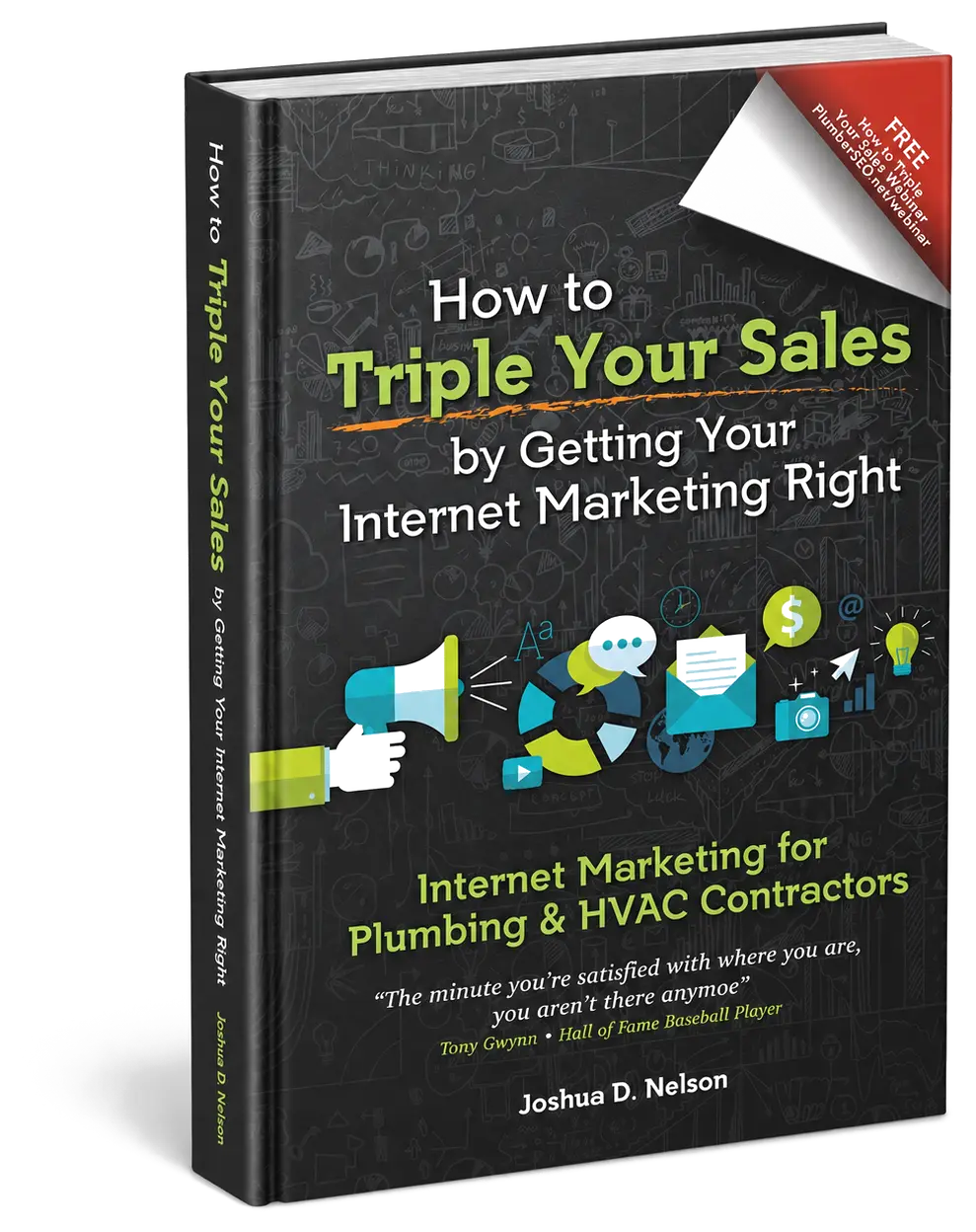
Josh Nelson's How to Triple Your Sales by Getting Your Digital Marketing Right lays out this entire system, written for plumbing, HVAC and electrical contractors. Read it online, listen to the audiobook in the truck, or download the PDF.
It comes with the Growth Training Library: 10 recorded workshops, a keyword research tool, the Marketing Plan Builder, a Google Business Profile action plan and the lead-gap calculator. Delivered by email, instantly. No call required.
Get free access to the book and the Growth Training Library →
Schedule a Strategy Session
Bring your market and your numbers. We will show you where you stand against your real competitors, what is holding your visibility back, and what it would take to fix it — whether or not you hire us.
We work with one contractor per market.
Keep going
More frameworks in the contractor resource library, or see what this work produces in the contractor case studies.