





Podcast: Play in new window | Download
Subscribe: RSS
Let's build your plan to CRUSH it in the New Year Online. In this video I'll be going over the simple 3 step process to CRUSH IT with your online marketing in the new year.
What You're Going to Get
- Our exclusive Lead Generation Planning Spreadsheet
- Monthly goal breakdown template
- Marketing budget calculator
- Channel allocation framework
- KPI tracking system
What You're Going to Learn
- Calculate exactly how many leads they need per month
- Determine precise marketing budgets to hit their goals
- Allocate spending across channels for maximum ROI
- Leverage AI and automation to reduce overhead
- Use video to position themselves as local experts
All right, hello and welcome. So glad to have you guys with us. I’m really excited for today’s session. We’re going to be doing our 2025, digital marketing plan session. And really this is for you to kind of think about, what are your goals and targets for the year? How does that break down like, you know, how does that break down by month? And more importantly, from a marketing perspective, what marketing strategy, what marketing initiatives do you need to put in place in order to make that a reality? And so that’s the focus, kind of just looking back on 2024 I’d love to know how you felt it went reflecting on 2024 good, bad or indifferent. If you had to rate it on a scale from one to 10, one being it was terrible. You do, like negative profit. You didn’t hit any of your goals. 10 being you crushed it. You exceeded your goals. You exceeded your targets. You feel really, really good about 2024 I know we still got a couple weeks left, but let me know. How would you rate 2024 just kind of in retrospective, drop a number in the chat for me.
And this is live, and this is interactive, so I am counting on you guys to engage with me in the chat. Throw me a number, good, bad or indifferent. Okay,
will gave it a
two. Let’s see. Julie’s giving it an eight, solid. Steve’s giving it a four, Kelly’s giving a six, okay, good. You know,
awareness proceeds change, right? It’s always good to look back at the previous year. If it was an amazing year, you gave it a 10 out of 10, that’s great news, right? Make sure that you double down on those strategies that worked. If it wasn’t, and it was like a little less than that, whether it’s a five or a three or a two, it also brings awareness like something needs to change. Going into 2025 either with how much you spend or the strategies that you implement, or like the way that you track things, if you expect to get a different outcome. So kudos to all of you guys for making the time to be on today’s session and to prioritize this work of really building out your plan, your strategy for the new year. So here’s the plan for the session. I’ve got about an hour and 15 minutes allocated for this. Some of this you’re going to want to continue with after we wrap up today. But number one, first and foremost, I want to make sure you’ve got clear goals and targets for 2025 and really have that written down, anchored in front of you, that way you and your whole team know this is where we’re going. We’re going to call our shot for 2025 and I think a lot of people do that, but oftentimes we don’t align the KPIs. So if that’s the goal for 2025 a revenue goal, a profit goal, an average transaction value goal, an average job value goal, then what is it going to take, from a KPI perspective, key performance indicators to make that a reality. So we’re going to realign and say, Okay, well, if the goal is to get to that, how does that break down by month? And then how do we know, if we’re on track, how many leads are we going to need to generate in order to make that a reality? And then we’re going to map the plan for accomplishment. So usually, if we figure out the goal, and then we figure out how it breaks down by month, and we figure out how many leads we’re going to need to generate in order to make that happen. Order to make that happen, how many book jobs? Then we can map the plan. All right, we need 175
inbound leads every single week to make that a reality. What do we need to do with our website or SEO or pay per click or marketing strategy in order to bring that into existence? And so we’ll kind of reverse engineer based on your goal. What does the budget need to be? How much should we be spending? What channels should we be investing in? We’ll talk about some of the emerging channels that you might want to tap into. And then, what are some of the important trends? What are things that have changed in 2025 versus 2024 2023
so that you’re staying ahead of what’s happening in the marketplace, and you can be the industry leader, as opposed to an industry laggard. And I really believe that when we do this process and we do it right, this is going to set you up for massive success in 2025 and beyond. So if this sounds good, if this is what you came in for today, and if we can cover this on today’s session, just give me a yes in the comments. If this feels like a good plan and a good use of your time and your energy for today’s session. Taggart electric. Steve Kelly, will thank you guys for engaging with me. I appreciate it. So I did put together a workbook, and I found it’s easiest to modify these workbooks on Google Docs versus trying to download a PDF. And so you guys can all download this and access it like in a separate tab for me by going to plumber, seo.net/ 2025, dash plan Christian just put it into the chat. So when you click that, it will open up a Google Doc. It will ask you to make a copy. Now that’s going to be your editable version of this document that you can work from. I’m not going to get into it just yet, but I just want you guys to know it’s there for you. This will drive today’s session, so just give me an open. Type open in the comments if you were able to get that open on your Google browser tab. Important that
you get it open? Because I’m gonna have you do some thought work. I’m gonna have you do some exercises. I’m gonna have you do some math. All right?
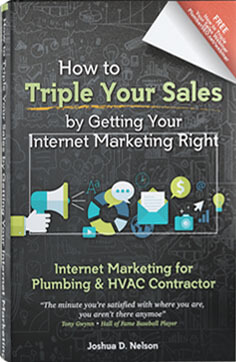
Kelly’s got it open. Taggers got it open. Julie’s got it open. Fantastic. We got that open. So real quick, for those of you who don’t know, my name is Josh Nelson. I’m the founder of plumbing and HVAC SEO. I’m the author of the book How to triple your sales by getting your digital marketing right. I’m actively involved in a lot of the plumbing HVAC organizations like PHCC, QSC, next R service roundtable, CEO warrior, and the list goes on and on. I’ve had the opportunity to speak on a lot of the industry conferences about digital marketing and what’s working in digital marketing today. But I’d say more important than any of that stuff is at this point. I’ve had the opportunity to work with literally hundreds of the top plumbing, HVAC, electrical contractors in the country, helping many of them go from, you know, obscurity online, not getting the results that they want, to being the dominant presence in their marketplace. And so what I’m going to be sharing isn’t based on theory. It’s not based on, you know, hey, this, this is something I think would be a good idea. It’s based on my real world experience working with companies just like yours. And I tend to, like, I like to use case studies, because it’s anybody can talk about it. But let’s back up the concept with the reality. Here’s the client, here’s how this strategy was implemented, here’s the results that they’ve gotten, so that you can kind of not just hear the idea, but the execution of the idea, and what the outcome will actually be just like, Okay, if you’re okay with me sharing a couple of those examples and case studies as we go, Taggart says, Okay, fantastic. I appreciate that. And our company, plumbing, HVAC, SEO, we’re on a mission to triple the sales of 1000 plumbing, HVAC and electrical companies over the next five years. So we’re really excited about that. This is everything we do kind of organizes around it. And we got a team of 60 employees now across the country that do this work day in and day out, like building the websites and writing the content and doing the SEO and managing the paid search campaigns and everything in between. And so, you know, if you’re in a place where, like Josh, I’d really like to have a chat about your company actually helping us in 2025 implementing these strategies so that we can get the results that we’re after. You can schedule a complimentary we flow acceleration session at Plummer, seo.net/schedule,
it’s just a complimentary one to one. I’ll be able to cover this today as a group, and you’ll get great insights. You’ll get great takeaways. But something magical happens when it’s just you and our team, looking at your goals, looking at your plan and helping to see like how we can help, or maybe not help, but just get you clear on how to execute. So just know that’s an opportunity scheduling a free one to one with with me and or my team. So let’s get into 2025, digital marketing plan. First step that we’re going to want to do is set clear goals and set clear targets, right? This is the main thing I want to make sure we do as our first step going into 2025 because there’s no sense thinking about what we’re going to do with SEO and pay per click and email marketing and YouTube and all that stuff, if we don’t have a clear goal that we’re striving towards. There’s a great book written by Brian Tracy called the ultimate goal setting guide. And in that book, he says, success is goals. All else is commentary. And it’s a really interesting concept, because as business owners, we get busy hiring techs, managing techs, doing marketing, keeping up with the financials, paying our taxes, the millions and millions of things we have to do within the business. But the real thing that’s going to move us forward, that’s going to get us the outcomes we’re after, is being laser clear, laser focused on the goal. All right, here’s where we want to go, here’s how much revenue we want to generate, here’s how much profit we want to generate. And by setting clear goals and clear targets, we can create momentum where momentum may not have existed, right? You think about this little sailboat out at sea. There’s no wind in the sail, and so the boat’s going to go wherever it needs to go. It’s going to go wherever it gets taken. But when we set clear goals and clear targets, and we say, All right, next year is going to be different. 2025 is going to be different. Here’s where I’m going to get you whatever that number is for you, maybe it’s a million, maybe it’s 5 million, maybe it’s 10 million. Here’s where we’re going to get to when we call that into the universe, when we write that down, when we create plans around bringing that into reality, and we bring the whole team in and say, Look, guys, this is where we’re headed this year. That’s where we can create our own momentum. We can really change course within our business, within our personal lives, within what we’re going to do and what we’re going to accomplish. And so this workbook that I’ve shared with you at Plummer studio.net/ 2025, dash plan, will help you do the math, build the plan, construct the strategy. And so I encourage you guys, if you haven’t already, be sure to open that up and have it open in a separate tab. So the first question in the workbook, and the first thing I really want you guys to solve for is the current reality. I want you to spend a couple minutes in your workbook there at the very top. It asks for a couple of things on a typical month inside your business today, you.
How much revenue are you generating, right? How much revenue is coming in on a typical month? Write that down. Make that super clear. How many jobs are you running on a typical month? How many service calls, how many installs, how many repairs? Break that down. Get that current snapshot really, really clear. And three other metrics I want you to have fleshed out in your mind, because we’re I’m going to give you some easy exercises to plug this stuff in. Is What’s your average ticket? Right when you get into the home, you take all of your service calls on a monthly basis. You divide that by the total revenue. What’s the average ticket? And I know you guys have this number right at the top of your head, make sure you have that average conversion in the field. So when a technician gets dispatched to a job, what percentage of those are actually converting into revenue for you? Well, it’s important to know that. And then how many trucks, right? How many trucks do you have in the business today? And so I just want you to fill that in in the worksheet. This is going to catch the the current snapshot. Where do you sit right now? I’m going to give you, like, 30 seconds in your Google Doc to fill that in. Again, Christian already dropped the link. It’s at Plummer, seo.net/
2025, dash plan. And I’ll kind of share my screen just for a sec here, so that you guys
are clear.
This is where we are, right. We’ve opened up this 2025, plan document.
Kind of scroll down. We know what we’re going to accomplish, and we’re just updating this current snapshot, average monthly revenue, number of jobs, average ticket, average transaction in the field, number of trucks.
All right, I’m sure you guys all have those numbers handy that should not be hard. The next thing I want us to look at is the goal for 2025 and make this a realistic goal, because the whole point is to reverse engineer a reality, right? Whatever we did last year, maybe it was a million. Maybe it was 2 million. What’s the goal? Are we going up double? Are we going up 30% how much revenue are you going to generate in 2025
how many trucks will you need in order to make that a reality? And then I want you just to write down real quick, like, why that’s important. How are you How will your life be different and better once you’ve accomplished that outcome? So type that in, and we’ll get into another exercise here in just a sec. But hopefully, I know a lot of you guys are from next door, from service round table, from CEO warrior. You do all day tracking on this stuff. So I’m not trying to beat a dead horse, but let’s just write it down so that we can create the marketing plan around it. Let me know in the chat. I’d love to at least get a couple of you to engage with me on chat here. What is the goal for 2025 in terms of revenue, how much revenue will you generate in 2025 let me know in the chat.
Julie, 4.5 love that number. Fantastic. Love the clarity.
Engage with me. We got, you know, a bunch of you guys on with me live so you know, engage with me in the chat. You I
put the number in the chat.
Okay,
would prefer if more of you guys would participate, but that’s okay. Maybe we’re feeling shy and bashful, and that’s totally fine. So hopefully, whether you’re chatting with me or not, you’ve got clarity in your mind. Okay, this is the goal. This is how much revenue we’re going to generate in 2025
this is where I want to get into breaking down the metrics. And so there’s a link here inside your workbook. You can also get to it if you don’t want to do it that way, by going to plumber, seo.net/ 2025 dash worksheet, or workbook Christian, if you could drop the chat there worksheet in this particular case, and it will open up this document for us. So this is our lead generation target planner, and this will just help us reverse engineer how many leads we’re going to need to generate via our marketing to make that a reality. And so since Julie was nice enough to engage. I’ll kind of enter some numbers here. I want you guys to you enter your numbers, but you’ve got this open. It’s a copy, right? So this is your copy. I’m not seeing it. You can modify it and use it however you want. What’s the goal for the year? So in her case, it’s 4.5 million for the company. Oops, gotta add a 04.
Point 5 million. It will automatically divide that by 12, so you’re going to a running average. So if the goal is to get the 4.5 million next year, that means we got to do $375,000
on a monthly basis in generated revenue. Now, of course, that’s going to be a mix of installs. It’s going to be a mix of repairs and replacements, but that’s kind of the the breakdown. The next question is that, Julie, if you’re still, if you’re still tracking with me. Can you give me an idea what the average ticket is in your in your company today? And I want you guys all to think about this number, because that’s what you’re going to put right here. And it will give you an idea how many service calls are going to be required, how many tickets are going to be generated. To bring that into reality,
any of you type in for me in the chat.
What is your average ticket in the field
will is 1300 fantastic. I’ve heard as little as with like Plumbing Repair companies, as little as 350 all the way up to like 15,000 for HVAC, that focus heavily on installs and replacements. Um, Julie says 310 install is 680
Okay, so it’s kind of, if you kind of average those out. Try and
get as clear on that number as you can. I’m just going to say, let’s just say the average ticket is 800 right? So if your average ticket well, and you’re putting your numbers in, I’m just using this as an example, if your average ticket say 800 it tells us we need 469
booked, billed jobs per month in order to hit our 370,070
$5,000 revenue target. So I mean, this is easy math, but sometimes it’s good to kind of reverse engineer that. Okay, so we know to get the 4.5 how much revenue we need to generate on a monthly basis, and then we know, based on our average ticket value, how many jobs we need to have dispatched into the field. The last question that we have to enter is, what’s our average conversion rate from a lead to a booked job? And some of you guys know this right off the top of your head. Others of you might be guessing, but I’d love for you in the comments, let me know what that average conversion rate is. So this is either somebody chatted in or they tried to schedule online, or they picked up the phone and they called into the office. Uh, Jamie’s tracking 62% fantastic, right? You must have a good dispatch team that answers the phone, that sets proper expectations that that’s fantastic. Um, anybody else care to put a number? If not, I’m going to use Jamie’s here.
Alright? So whatever your number is, let’s just say it’s 62% in the case of Jamie. So if you got a 62% conversion rate, and you need 469
book jobs, then you need 756
leads per month, right? Ideally this, this is simple math, but if you’re going to build the goals and plan for 2025 then we need to figure out how many leads we’re shooting for, and if we know how many leads we’re shooting for, then we can reverse engineer the marketing plan, the marketing strategy, how much we need to spend in order to make that a reality.
So if you want to put the number in, for me, those of you that are live, put the number like, how many leads you need to generate per month? Um, or if you prefer, just say, Done. Just to let me know that you’ve got this plugged in. Hopefully, this is a simple but practical exercise that gives you clarity on how many leads we’re going to need to bring to the table. Could be web forms, could be phone calls, could be online booking to hit the goals and targets that we’re after.
Okay, Will’s got it done. Fantastic. Okay, good work, everybody. Taggart needs 185
Taggart electric. Fantastic.
That was my first objective. Just to make sure we’re all clear what’s the goal? There’s power in thinking about it, writing it down, having it on on a spreadsheet like this, and then take it one step back. How does that break down by month? And then take it one step back. How many leaves do we need to generate month over month in order to make this a reality? Right? And a little bit, we’ll kind of get into another exercise that helps you figure out how much you need to spend on marketing, how you should allocate that across SEO, Google ads, everything else. We’ll get into that towards the end of today’s session. So number two is, let’s think about the marketing strategy and what we really want to put in play in order to bring this into existence in our in our businesses. And so I wanted to, I wanted to kind of talk first about some of the key trends and some of the key things that are happening in the marketplace that you want to be aware of going into the new year. So I’m just going to spend a quick moment on this, and then we’re going to really dial in and kind of assess the plan for the year. So
let me just share this. Okay, so five, five big trends you should all be aware of. You should all be thinking about. You should all be paying attention to. Number one is the increase in popularity of AI. And so we’re talking about chat GPT, we’re talking about Claude. We’re talking about all of the other bronc and all the other AI, large language models and platforms that are coming on the marketplace. So today, your customer, predominantly when they need your services, is going to Google, and they’re typing in plumber or HVAC contractor near me, or, you know, best AC repair companies in my market, right? Like Google is still the number one place. However, as more and more people start going to chat GPT, to ask questions, and they start getting better answers, and they start feeling more confident that, wow, this is a place where I get better feedback,
there may be a shift going into 2025, and beyond, where other search platforms rise and pop.
Popularity, we’ve already seen a noticeable increase in search happening on Bing, because Bing pulls in the chat GPT data into its answers, and so a lot of people have started migrating to like, Hey, I prefer to run these searches on Bing. The other thing we’re seeing, though, is chat GPT has launched its own search function today if we search for a plumbing company or an HVAC contractor, the local search isn’t there, right? There’s not great answers. It’ll give you companies, but nowhere near the kind of quality data that you’re going to get from Google. But it is important, this is a big trend that is absolutely going to be something you want to be paying attention to. And I think on those same lines, talking about AI, you know, like, let me know on a scale from one to 10, one being you don’t do it at all, 10 being you’ve got aI running every day in your plumbing, HVAC, electrical business you’re using in a variety of ways. How are you harnessing the power of AI in your company right now? Hopefully, give me a just give me a number, a self assessment, because with the use of AI, there’s gonna be lots of ways that you can reduce redundancy. You can reduce the time it takes to get things done. You can increase profitability and efficiency. Steve is using it at a two start playing around with these tools. Keep a keep an ear to the ground on how you can leverage these. Jennifer’s using it for review response and text message replies, perfect, right? I think that’s a very, very practical play. Fantastic. I just want to plant that seed into 2022. Not only should you be thinking about how your customers are going to use it, you should be thinking about how you can use it in your own marketing when you write review responses, when you create service pages. When you put together marketing messaging, you can bounce that message off claude.ai, or off chat, GPT, and get some great ideation, some great concepts that you can roll into your marketing. So that’s one is AI, number two is online scheduling. And I hesitated to put this one in because I believe most of us know that we should have online scheduling on our website. We know that our customer giving the opportunity to take out their phone and pick a time and just have the technician show up, would prefer that, but some of us haven’t. So let me know on a one to 10, you know, 10 being you’ve got online scheduling, somebody can schedule in and you’re like, it’s dialed in, it’s running. It’s baked into your marketing strategy today, all the way to one like you’re not like, someone can’t schedule on your site. They need to pick up a phone call and have a conversation. Taggert Electric has got a nine so he’s got it running. I’m going to talk a little bit about these platforms. You know, you guys are all using house call, pro or service Titan or field edge. Most of these now do have online scheduling, and if you’re not giving the opportunity for your customer to schedule in, even if it’s just a soft schedule,
you’re going to start to lose customers, right? Like today’s environment, if you want food from the grocery store, if you want food from your favorite restaurant, you don’t call in and wait for the person to answer, and then, you know, get like, call out everything you want, you pull up the app, you pick the food that you want, you press submit, and it shows up at your door, right? And your customer eventually is going to expect that from you in the traits so the contractors that are already putting this in play are making it easier for their customers. They’re reducing friction. And so it’s really something the technology already exists. It’s just a matter of you implementing it. I think this is a high priority for you in your business. In 2025
Trend number three is two way text messaging, and this is just recognizing that, you know, yes, online app scheduling is important, but your customer that used to always just want to call in and talk to you in the office if they’re given the option to do a message, a two way text message, like, Hey, I’ve got some questions. Hey, can you get someone out here on Thursday at three and know that there’s somebody on the other side, whether human or AI is going to write back and say, yep, and schedule it in for you.
They prefer that, right? So you know, if you’re not already leveraging two way text messaging, via chat on your website or via follow up after the service call, that’s a big opportunity, right in the technology exists for this today, and so you want to think about implementing it in 2025
number four is starting to leverage AI in follow up. And I think if I scroll up just a little bit here, Jennifer is already starting to do some of this. The large language models that exist with chat, GPT, with Claude, even with Gronk, are becoming very, very intelligent, and you can start to program them with these are the questions my customers ask. These are the answers that I would expect, and you could literally use AI to manage a two way chat with your clients to bring somebody all the way to.
What’s the availability on the schedule to actually confirm the appointment this technology is new. It’s kind of like on the newer side of the spectrum coming into 2025 I know a lot of contractors already using this, already loving this. And so I would at least start to test these technologies. I would start to test this going into 2025 and then kind of more on the fringe, not quite there yet, is AI voice receptionists where, right now, somebody calls your office and they talk to Betty, or they talk to Linda, and if Linda’s got five calls coming in, she may not get it. Or you got a team of people answering the phones, some of you ring out to like a third party Answer Center that’s reading a very basic script hasn’t been trained on what you do.
We have test of this already playing in the real world, where the customer can call in, speak to a very natural sounding AI voice that’s right on top of the ball, ask questions, confirms the phone number, confirms the email address, and does exactly what most of the you know, Ruby receptionist type services would do, only much quicker and much more efficient at a lower cost. Um, so that’s just something to start thinking about. Ai automation to respond and to be quicker to follow up with your leads for sure. Um, AI voice receptionist is something to start testing and looking at going to 2025,
and then number five again, we talked a lot about AI, and the fact that AI is here, the fact that AI is creating content. Some of your your competitors, are creating tons and tons of content using AI, and that’s going to give them a little bit of an advantage, because they have more content potentially, on their website, more content on their blog.
But I think as more and more AI generated content sits in the online sphere, it’s going to start to become noisy. It’s going to start to become, you know, it’s just all a mush. So what’s the one thing that you really can’t replicate with AI today video. And there’s some video based stuff out there where you can make fake voices and things. But the main thing that would set you apart from your competition, I believe in 2025
is authentic video, video of you as the owner, video of your technicians in the field. And it could be like, well, recorded video. Hey, welcome to our website. Here’s what we do. It could be video answering specific questions, and it could be video of you and or your super tech out in the field. Hey, I’m going out to this job today. This is what’s going on, right? They’ve got a they’ve got a burst pipe, and we’re going to go take care of it, and then they kind of shoot what’s happening there, and they turn off the water valve, and they fix the pipe. You know? Hey, you know, we love doing this. If you got any kind of plumbing issues in the West Virginia market, give us a call.
I believe in 2025 2026 2027 the the home service companies that are creating that kind of content are going to stand out from the competition, because you it’s really hard to replicate personality authenticity that you can only get through through video. So I just wanted to spend a couple minutes there talking about some of the trends I think are going to heavily impact your kind of your marketing strategy going into the new year. So let’s get into the true model and like the main thing you want to focus on to reverse engineer the leads and targets that you set up for yourself. And so this really breaks down to our agency growth model. And there’s three things you’re going to need to do in order to make sure you bring that goal for 2025 into reality. Number one is we’ve got to drive leads right. And now we know what that number is. We know we need 150 or 350 or 750 leads. Month in and month out. Number two is we have to maximize conversion, right?
Not all traffic to your website is created equal. Not every lead that you generate on the phone or via chat is created equal. We have to make sure that we’ve got a conversion from that visitor into caller, from that caller into a book job, from that book job into a repeat customer. So we’ve got to maximize the conversion at all of those checkpoints. And then, number three, we have to optimize our results, right? We have to figure out what’s working. We have to figure out how much we’re spending. We have to double down on the strategies that are working best, so that we can optimize our profitability, optimize our return on investment, and minimize our spend.
So when it comes to driving leads, the number one place still in today’s market is organic, right? The first thing we want to make sure we’re doing is we’re coming up in the non paid listings. We’re coming up on Google, on Bing, on the online directories that our customers are looking without having to incur a cost per click, without having to incur a cost per lead. And these opportunities exist. And if you’re aggressive with your online marketing strategy and with your SEO, you can be the one coming up. You can be the one getting those leads.
Fees and those calls and so, you know, I’m not going to spend 45 minutes going into a deep dissertation on how to do SEO for your plumbing, HVAC, home service company, but the 8020 principle really is, there’s some things we do on the website, there’s some things we do off the website, and then there’s some things we do on an ongoing basis to build the authority for our website and for our service pages, and so 8020 here, and I’ve got it in your workbook. You can go through the checklist. If this is a focus for you, can say, hey, here’s what we need to do with our SEO. We want pages for each of our services, pages for each of the cities that we operate in on the website. We want to properly optimize the titles, the H ones, the descriptions and the content for each of those and then we have to make sure the content is unique. Right from one city to the next, one page to the next, it should be unique to our company. And there’s great tools that we can use to figure out what are the five companies that are ranking at the very top for those keywords. And then we can figure out how much content is on that page? How many images are they using? How are they using FAQs and reverse engineer our content structure for the most important keywords on our website, and that gets us in the index for our keywords. From there, it’s the Off Page stuff that drives our rankings, having a properly claimed and optimized Google My Business Profile, having lots of citations, having lots of reviews, and then building our authority profile through link building, through citation development, in order to move up the rankings. And so I’ve got a checklist there for you. You probably want to look really closely at what your SEO strategy looks like today, where there might be room for improvement. A good example of this, a company we work with in least East Lansing is the meridian advantage for the meridian company. And if you type in East Lansing, plumber, plumbing, Drain Cleaning, AC repair, you see they come up dominantly on the map. They come up dominantly in the organic results for hundreds of keywords, and it became as a function of properly optimizing the website and building the authority. I just want to kind of show you, because I said I was going to share some examples and case studies of this in the real world. This is their ranking, their analytics reports. We we like to really focus on, how much are we spending, how many leads are we generating? What’s the average cost per lead so that we can optimize for results. So you can see here, they spend about $8,000 per month. They get about 417 leads on a monthly basis from our online marketing services, about $19.32
per lead. Really, what I want to draw your attention to is where those leads are coming from. So we’ve got 95 from organic, which is like the the organic search, 127
from Google ads or pay per click, and then 173
from Google Maps. So kind of, if you roll that up there, get it to move forward. A lot, a lot of it, the lion’s share, is coming from organic. So if they weren’t focused on SEO, if they weren’t coming up in or in the non paid listings, they’d be missing out on a lot of the opportunity, like 65%
of their lead flow directly from organic, and so just make sure you haven’t forgotten about organic, and that you’re constantly planting those seeds to make sure you’re coming up in the non paid listings in your market.
From there, we want to tap into the power of paid ads, right? And paid ads is the full spectrum from Google ads, Google, local service ads, retargeting, Facebook, Tiktok, YouTube. You don’t want to do all of those simultaneously, but it’s going to be much different. If you’re trying to get 100 leads per month, you probably do that predominantly through SEO and local service ads, potentially. But if the goal is to get 2000 leads per month in order to hit your goal, then you may need to do more branding. You may need to have a more aggressive paid search budget. So when it comes to paid ads,
I really think at the foundation is organic, right? If you don’t have a great website that’s built to convert that’s coming up in the non paid non paid listings.
You shouldn’t be over investing in paid advertising and a lot of contractors, unfortunately, they wind up going all in on local service ads and Google ads, and they don’t ever get the the lowest cost, highest value opportunities coming in on a consistent basis. So we start with organic. From there, paid search and local service ads, right? And I think you want to prioritize your budget towards local service ads. Get as many of those local service ad leads as you can, while still spending some for the keywords, especially the higher transaction service calls and Google ads right up from there, I wouldn’t spend another dime on any type of paid advertising without two things, retargeting, right, putting the pixel and then following your prospect around the internet over at least. Let’s call it a 30 to 60 day window of time where they might still be in a buying frame they got.
To your website down here. Let’s retarget them and make sure we capture them, because not everybody that gets the website converts. Not everybody that gets the website is going to convert right in that moment, but they might be in a buying frame for a 6090, day window of time. We found retargeting to be really, really effective. The other is automation, right? No sense spending a lot of money on local service ads or on Google ads or on SEO if when a lead comes in, we can’t follow up immediately, we’ll talk more about speed to lead and the importance of that. But as you think about like really tapping into Google ads, into local service ads, and advertising in general, you know, we do those things, and then we layer on retargeting and marketing automation as quickly as possible.
Up from there, you’ve got your, like, your pay per lead services, like a local like thumbtack, like networks, Angie, right? You get those pay per lead services, and then you’ve got your, your paid directories, which, you think about it, the ones that you can pay per placement and just pay on an advertising basis, more like Yelp and things like that. I like to think of these more as augmented solutions. So if, for some reason, the organic, paid and local service ads isn’t generating enough leads to hit the lead goal that we need in order to hit the revenue goal, and maybe we got a parks truck. Well, we can always turn on Thumbtack and some of these other services leveraging automation to make sure we’ve got speed to lead, to build the tech, so to speak, so that we can make sure we hit the target. Your conversion rate on these leads is going to be lower than your organic and paid leads, but at least it’s opportunity in play. Now at the very top of the hierarchy, we’ve got Facebook ads, YouTube ads, Instagram, Tiktok, for most plumbing, HVAC, home service companies doing less than ten million per year. I wouldn’t spend a lot of energy here because it’s interruption advertising. It’s brand advertising. You’re trying to get yourself known and whether they’re in the market or not, you’re just trying to plant that top of mind awareness so that they remember you when they are ready, and they wind up searching and clicking on you and doing business with you. So can it work when you’re at a larger level and you want to be the dominant player in your market? Absolutely, if you’re already spending money on radio spending money on billboard ads, you’re going to get much more impression share for lower cost through social media advertising. But when I find a home service company that is just trying to run Facebook ads or Tiktok ads as their primary channel, they tend to struggle. The average cost per lead is very high. It’s hard to scale. So just thinking about paid advertising, that’s the way I would stack it, Google Local Service ads and Google ads, and then maybe some of those paper lead services. So a good
a good example, kind of going back to the meridian company on this kind of looking at their spend on Google ads, specifically, 4000 directly to Google ads. You can see here 137 leads track. That’s about $33 per lead from from Google ads, right? And you know, Google ads is tough, local service ads, you should be able to win, assuming you can get into their three load rotation. But you need to know your metrics, right? We need to know how much we’re spending, how many jobs. Many jobs are getting booked. We need to track that so that we can spend our money wisely. And in some markets, we will see the average cost per click, regardless of how well optimized the campaign, too high. And so the average cost per lead jumps to hundreds of dollars per lead. Very hard to monetize that. So you gotta track these numbers. You gotta really know the metrics, but it can work very well in your favor. One of the companies we work with is Cardinal home services, and you can see here $9,000 to spend in Google ads. We track 224 leads. That’s an average of $40 per lead. You kind of do the math. I’m not gonna run through this number with you specifically. Based on their average transaction value, on their average conversion rate, they get about a seven and a half time return on spend from that channel. And so that’s what we’re after. Like, if we can leverage Google ads, if we can leverage Google Local Service ads, and get a five to 12 time return on investment. Obviously, that’s a great channel that we want to plug into, but we have to have our transaction value dialed in. We have to have our conversion rates dialed in, otherwise it can be a hard game to play and a hard game to win.
And then the third channel, when it comes to driving leads, is database marketing. And I think for a lot of you guys looking into 2025 look into your marketing strategy, how you’re going to hit that revenue target.
Make sure you don’t forget you’ve got customers that you’ve done business with over the years. You’ve got customers, ideally, prospects, that have called in and acquired but didn’t convert. And usually this is low hanging fruit. This is low hanging opportunity, and we want.
To be following up with those past customers. We want to be following up with those past prospects. And we can create opportunities without massively increasing our spend, without massively increasing our budget. And so this is just an example using text we find that text database reactivation, so sending a text message to your customers once a quarter, maybe even once a month. Hey, it’s been a while since we’re out there. Here’s an offer, and they can write back, yes, they want the details, and you can book them in. And this doesn’t cost you $1 to implement, right? You just need to understand how to structure the campaign, how to structure the strategy. As an example of this, 72 carnie and sons, 72 degrees had a list of 5000 we sent a database reactivation offer. 300 of them replied. We had 119 book jobs. 24 jobs completed, over $84,000
in revenue generated without spending more on Google ads, without spending more on SEO content, without doing any of that stuff. And so make sure you’re not sleeping on the opportunity to engage with your customers and to generate opportunities from there. So that’s the main things in 2025 I want you to think about from a lead generation perspective. To hit that lead target, I’d love you to open up in your workbook, there on page six, hopefully you got the other tab open, with your workbook open. If you scroll to page six, I’m going to ask you to highlight and rate yourself green, yellow or red. So organic. Maybe it’s yellow. We rank for some keywords, but not all of them, and I think we could do better here, right on paid. Maybe it’s red because you’re not running it, or you’re spending money which you don’t see, like a three to five time return on investment, you’re just losing money and the database, maybe that’s red because you’re not following up with your customers on a consistent basis. Just a little self assessment here to kind of form that plan and form this strategy to hit the number of leads that you need on a monthly basis couple minutes in your workbooks,
and I’ll say on the on the organic side, while you guys are filling that in,
typically, it’s, it’s a challenge to figure out, like, what are the key words somebody might type in when they need your services? How am I ranking? You know, to have to run 100 separate searches on Google to figure that out,
you know, and it can be hard to self assess this. So one of the things we like to do, for those of you that attend these workshops live, is we will run because we have these tools and we know what the keywords are, we’ll develop a custom keyword list for you based on your service area, based on the cities that you serve, a list of the most important keywords. And then we’ve got tools that will show us exactly where you’re coming up on Google, on Bing on Google Maps, and show you like, are you in the first spot? The 10th spot? Are you on the first page? The fifth page? Sometimes that awareness can help you see, like, wow, I’m ranking for these four words, but there’s 100 really important keywords I’m not coming up for. And so we like, we would love to do that for you. Completely free Christian, if you can drop the link, yeah. If you go to Plummer seo.net/schedule,
enter your details, pick a time that works for you. Our team will probably spend an hour building that report, running the ranking report, and you can take it and use it however you want. You can implement it in your 2025 plan, and or if you want to talk with us about how we can also show you these are the keywords you’re not coming up for. This is what we would do differently, and this is how we can help you rank for those terms.
So for those of you still with me, in the in the chat, let me know, what did you come up with that’s red? What’s the opportunity? Is it organic? Is it paid, or is it database, or maybe it’s all free, right? Just let me know what’s the what’s the focus for you on those areas?
Okay? All three says staggered electric good awareness proceeds. Change will database and automation. All right, we’re gonna talk more about automation right now.
Steve says database marketing could be better. Fantastic. That’s a low hanging, high high converting opportunity. So I’m glad, hopefully I’m like shedding some light on things you may already know, but just shedding some light on some things that you might want to focus on more to hit those goals in 2025 so next thing we want to do is we want to maximize conversion, right? There’s no sense driving a bunch of traffic if we can’t convert those track, those visitors into callers, into web form submitters. And so the first piece to convert is your website, and there’s very specific things you can do on your website to double or triple the conversion rate from visitor to lead, right? And I’ve got a long checklist in your workbook. I’m not going to read every bullet for you. I don’t want to have you guys fall asleep during today’s session, but just know in your workbook, if you scroll down to the website section, you can check box, man, does my website hit these things? Do I have the key components in place that are going to really impact my conversion rate? And couple of good examples of this, and I’ll just pull them up real quick so you have a visual representation to go along with it. Couple of really good examples.
One.
To be. Let’s just look at at Valley plumbing. This one of our longtime clients in Salt Lake City Market, and the main things we’re trying to implement that have a big impact on your ability to convert is personality and authenticity. Right? Using real pictures of you, your team, your trucks, where possible, that resonates different than generic imagery or stock photography or even AI generated pictures of technicians and things which a lot of people are doing get real like get a real video shoot done, and
smile right and put the real team out in front that is going to improve your conversion rate. Have the phone number in the top right hand corner easily conversion. Have an option where they can chat with you. Ideally, this would be two way text messaging, right? And we have this built into conversion amp, our platform, but there’s lots of tools now, like chirp and others that Zara talk that lets you do this, give the customers the ability to to have a two way communication with you, and then give them the opportunity to book online, right? And so schedule engine, you can do this directly in service, Titan, directly in house, call Pro, whatever platform you happen to want to use, make it easy for them to convert in the way that they want to convert. And we know they’re going to get to the website, right, if we’re marketing correctly, they’re going to get to this website, and they’re either going to see something that they like and resonate, or they’re going to bounce if they like what you have on the page, then we need them to have an easy way to convert into a lead.
The the easiest conversion right now would be let them book directly online, pick a time, even if it’s just a soft schedule. So let’s say right now, if I filled out this form, I scheduled the time for Thursday, at three o’clock that goes to your team and they maybe there’s not available, availability for Thursday at three, they can call the customer say, Hey, see, we see you scheduled. Can we move you to a different time? A scheduled, even soft scheduled appointment, is much more likely to convert than somebody filling in a form, right? If they’re filling in a form, and it’s just like a place to enter their name and their email address and ask a question,
you can call them back. They’re probably busy. They probably hit the back button and scheduled with somebody else already. And so we want speed to lead, but if we can let them schedule, that’s going to be your number one conversion. Number two would be to give them the opportunity to chat and put some type of human or AI automation to quickly respond back and engage answer some questions and take them to the next step, which is to go ahead and schedule or pick a soft time. And then, of course, there’s still a large part of the population that likes to call right? So we want those three conversion points, type three in the comments, even though, like, if like, if you don’t take anything else away, but you can put those three conversion factors on your website, you’re going to be much better positioned for success in 2025 so this is marl mechanical, another company that we work with, and I just want you to kind of see here, right personality. This is a picture of the owner. Talks about, you know, the ability to schedule today, financing options, triple A accredited ability to schedule right online. I could pick a time and, you know, be off to the races, ability to chat and have a two way text conversation, and then, you know, all of the other great stuff. Right picture of the team, testimonials and reviews. There’s a whole checklist of the other things you want to leverage. You can put video and interactivity on the website, but just type three in the comments. If that’s clear, we want to have phone chat and online booking, and that’s going to set yourself up for, like, a long ways down the track, for for being able to convert your visitors into leads.
Fantastic. Okay, so a visual example of this, again, we talked a couple times about the meridian company in East Lansing. Just want you to see here we’re tracking very closely how much we spend, how many leads we generate, and then we’re also tracking our conversion rate from visitor to caller, right? And you want your marketing company to be looking at that and like optimizing around, how do we get more of the people to hit this site to turn into a lead, which is going to turn into revenue for the business? And so tracking this pretty closely, you can see here 1045
visitors for the number of leads that we tracked. Divide that out. That’s a 32% conversion from visitor to lead, right? And so that’s what you want to shoot for. Most home service company websites convert at like 10 to 15% so you can literally double the conversion rate by putting some of these elements in place, the personality, the authenticity, to improve your conversion rate. Another company we work with, nixco plumbing in
Mason, Ohio. It’s a year $5,000 spend 535 leads. That’s $10.99
per lead when it comes to the conversion, right? 1073
visitors to the website. So those are potential buyers. 38% conversion rate from visitor to caller. So really important, really, just make sure that the website has those elements, personality, authenticity, multimedia.
In talked about video and being real, being the one thing that can separate you from AI in today’s marketplace, shoot some videos. Either you your main technician, the owner of the business, for each of your service pages for each of the different cities that you operate in that’s going to help with conversion. Showcase your online reviews and testimonials. Give them the opportunity to schedule online, give them the opportunity to engage via chat and make sure that you’ve got speed to lead baked into everything that you do.
All right? So that’s number one, we want to make sure our website is built to convert number two, the other thing that will really impact your rep, your your conversion rates, is your reputation, right? Because what we know is your customer looks you up, right? And they decide, Okay, this looks like a solid company. But before they call a lot of times, they go back and they search your company reviews, and they’re looking at what Google says in terms of number of reviews. They’re looking at maybe Yelp and Angie. They’re looking to make sure you’ve got positive sentiment, and you’re a quality company that’s going to do a good job, and so you want to make sure you’ve got enough reviews to be relevant, and that your average review rating, ideally, is at least a 4.5 star, because if not, they may start to second guess. They may start to be like, I don’t know if this company is quality,
outside of just providing a world class experience, right outside of training your technicians how to show up at the house and create a class experience, and then plant the seed for getting more reviews. One of the key things you can do for driving reviews is to have a review request go out after every call and going to 2025 one of the exciting trends that I’ve seen is we could start to automate that process. So in the past, somebody in the office might go in and send an email, they might trigger a text message. We had a platform we always use, still use today, called nearby now, and the technicians would check in in the house, but that they were there, and then they would push a button to review request. All of those required someone to push a button, and the clients that we’ve seen that have have seen oversized growth in the number of reviews they have, which drives higher conversion rates, drives better Google Map rankings. Is the ones that are using automation. So when they close a job in service Titan or in house call Pro, we can set an automation up that fires a review request right. And when that review request happens, after every service call, we get more reviews right. And that really is a powerful thing that you might want to tap into if you’re not automating your review request process. That can make a big, big difference. Really. Good example of this is plumbing nerds in Bonita Springs. You can see here 1102
reviews in Naples, and then 1500
in Bonita Springs. And that’s over like, like, a seven year window of time. They’ve really gotten tons and tons of reviews. It’s a function of using automation so that we review request after every service call, predominantly the text message, right? If you send an email requesting a review, a lot of people don’t see that email. Most people don’t click that email, but if you send a text message promptly after the service call that gets seen, that gets clicked on, that generates a review. And so here’s the plumbing nerds. You can see little larger spend, $21,000 in spend in online marketing, 884 leads, an average of $25 per lead. Part of the reason we’re able to do that is because they have such a great reputation, because they have those online reviews, and it makes a big difference in terms of how they convert.
So the third thing when it comes to maximizing our conversion, going to 2025 is automation. Couple of you guys mentioned, this is maybe a big opportunity for you to tap into
lots of ways to market. There’s lots of ways to generate leads. I think there’s a plethora of opportunities to drive more leads. The biggest thing that will impact your conversion rate is how quickly you follow up and how frequently you follow up after the lead is generated. We find that web forms, that form where somebody goes in and types in their name and their details gets sent to the office, sits in an inbox, gets called every once in a while, maybe once a day, twice a day, at max, and that’s where leads go to die, right? We see like those web forms convert it like 50 to 60%
and so what we want to do is leverage automation, and this exists via text message, via phone and via email, where leads are followed up within 15 minutes or less, and they get dropped into a queue where they’re touched five to six times until they convert. We find when we put that type of automation in place, our conversion rates can double or triple, and so I think there’s lots of platforms that do this. The platform that we use, that we’ve developed is called Conversion amp, and basically, wherever the visitor gets to on your website, they can either call in, they can submit a form, or they can start a chat. And we’ve got automations that.
Editor that move those people to the outcome we want, which is for them to schedule in either on service Titan or in our internal calendar, to be a soft booking so that we can follow up quickly. We can follow up via text. We can follow up via the phone, and we can maximize our conversion. If you’re interested in learning more about conversion, if you go to conversion amp.com
and schedule a time. We’ll walk you through how it works. You can plug that in standalone, or if you become a client of ours, we definitely will implement that on your behalf to help you with this entire approach.
Okay, so that’s conversion. I want you to go into your workbook again on page six here. How are you doing? Right? It’s website. Is it? Green Man, our website’s awesome. It’s built to convert. It’s got those three conversion elements, reputation. Do we have at least 100 reviews? Do we have at least a 4.5 average star rating? If not, you know that might be yellow or red. And then automation? Are we leveraging automation today, where every lead, every submission, is followed up with in five minutes or less and gets into a drip campaign for five to six touches until they convert.
Will says green, green, red. All right, so he’s got the website dialed in. He’s got the reputation dialed in, but he needs the automation. Fantastic. C says yellow, green, red. So websites, okay, maybe some room for improvement. There. Great on the reputation side, great reviews, but not leveraging automation. Fantastic. I appreciate you guys chatting with me. This helps me know that you guys are tracking along, and hopefully it’s shedding a light right as you think about 2025, and you think about that goal that you set, what are the key dials? What are the key things you want to focus on to make this real fantastic work? Everybody. All right. So the last piece of this model to accelerate our growth and to hit those targets in 2025 is we need to optimize for results, right? We have to figure out what’s going to get us there, right, what’s actually generating the best outcomes. And the first part of optimizing results is, is your spent? Right? We need to make sure we’re spending enough money in marketing to create the
the fuel to generate the lead flow that we want. And oftentimes, I’ll meet with a contractor or plumbing or HVAC company that has grown to seven and a half, you know, $750,000
a year, or a million dollars per year, we say, okay, like, how much are you spending in marketing? And at some point they hired a, you know, a service, and they spend like, 1500 or $2,000 per month.
And it’s like, okay, well, the goal now is to get to one and a half million. How much did you want to spend? And they’re like, Well, you know, three, 3000 total, right? And the fact is, the budget that you spent that got you to where you are right now, probably isn’t the same budget that you need to spend to get to that next goal, and oftentimes we have to expand the budget now. I’m not saying spend money in a vacuum, right? That would be foolish. That would be, you know, really, really bad, right? It’s not just spend money, but if we know that we’re going to spend those dollars, those dollars are going to be tracked, those dollars are going to generate leads, to generate book sales, to generate revenue that repeat that also drive repeat referral business. If we can spend the money and have a tangible return on investment, obviously that’s a wise investment in the growth of the business. And so we got to make sure that we’re spending enough. And so I want to walk you through a quick exercise here. I’ll share my screen, and I’ll point to where you get to this inside your workbook. This may be the most powerful portion of what we do today. So I know I’ve talked for a while, but I want to bring us back to exercise mode here and make sure we plug some of these numbers in. So in your workbooks, if we scroll down to where it says
at the top here,
I’m if I can find it. Maybe there it is, right there. This same worksheet, lead generation planner, you opened it earlier. I just want you to open it back up, or if you haven’t go back to there, and I want us to go into budget allocations, right? And so that’s up here at the top. I’m
uh, give
me a one in the comments. Once you found that sheet, because I’m going to walk you through this exercise, I promise to make it as painless as possible. All right, Tiger lectures. Got it. Steve’s got Okay. So here’s the reality. Typically, they’ll tell you that to stay where you are today in your business, you would want to reinvest about $5,000 back into marketing, right? And that’s based on my experience with NexStar and service roundtable and CEO warrior, and, of course, my own marketing research. 5% that’ll keep you stagnant, right? Six to 15% will give you moderate growth. So it’s like, Okay, I’m going to reinvest 60, 15% of my revenue back into marketing that’s going to create growth, right? Because you’re going to get more leads, you’re going to get more sales and accelerated growth. To really have a budget that’s going to move you forward quickly, you’d want to spend 15% plus, sometimes that’s an eye opener, right? Because it’s like, we don’t want to spend anything in marketing. We want it to be all word of mouth. I just want to bring you back to your work.
Sheets here, and let’s use I’m going to hit refresh here because it looks like it’s not going to let me edit it. Open this up, and I want you guys to plug in your numbers, but I believe the number was three and a half million as a target. But let’s just say three and a half million. Let me know in the chat what percentage you’re going to invest back into your marketing. Could be 3% could be 1% could be 15% knowing 5% would be, like, an average, like, just kind of stay where you’re at, type of budget, give me a number. Hopefully one of you guys will engage with me in the chat.
If not, I’m just going to, like, enter a number. So let’s just say
we want to have moderate growth, so we’re going to put 10%
into marketing.
That means we would invest $350,000
throughout the course of the year in marketing, right? If we divide that out on a monthly basis, that’s $29,166
to market, right? And that could be your Facebook ads. It could be your Google ads. It could be hiring a service like ours. It could be other things that you do as well. Um, hopefully this gives you an idea. Maybe you’re spending way too little. Maybe there’s more that could be invested in your marketing if you want to hit the goals and the outcomes that you’ve set for yourself.
So that’s the that’s the spend component. If anybody feels bold enough to, you know, put the percentage and the the amount that they’re going to invest in marketing, that would be awesome. I’ll talk a little bit here in a second about allocations. And like, no, don’t spend all of that on marketing in just online. We want to split that up, and we want to make sure we spend it wisely. But that’s the first thing, is, how much we’re going to spend, right? And this allocation sheet helps you figure out how much you need to spend from there to optimize results, we have to figure out what our average cost per lead is, right. We need to have a finger on the pulse of, if I spend five grand or 15 grand, and I generate a certain number of leads, how much is my average cost per lead, and how much is my average cost per lead from SEO versus Google Ads versus other marketing that I might put in place without knowing this number, you can be very scary, right? Could be like, Man, I’m just going to spend a lot of money, and I may or may not get that back, right? It’s really important that your marketing be an investment that comes back to you, and not a sunk cost, not a sunk expense, right? Companies that grow and scale. Think of it as an investment. They track it as an investment, and they make sure that there’s an ROI. I
think I might have unplugged my mic. Can you guys still hear me? Just give me a yes if you’re still hearing me clearly. I just bumped it down here. Okay, yes, perfect. So
we’ve given you some metrics here that you can you can see inside your tab, there’s a tab there that says what the averages are across the different industries. These these numbers are constantly changing, right? And it’s been an interesting year, like the cost of cost per click and the cost per lead across everything is is going up. Inflation is going up. Hopefully you’re charging more to your client base as well. But this gives you an idea what the average cost per lead is.
Make sure that you’ve got a tracking mechanism that will show you how much you’ve spent that month, how much you generated in leads, that can let you look back over time, January, February, March, April. We know where we want to go. We have to have the tracking right without the tracking very, very dangerous move, and so we put a dashboard in place for all of our clients, whether you work with us or you try and source something like this on your own. We’ll, we will put this in place for you, like where you can see how much should we spend? So Paul the plumber is one of the clients we work with. $12,000 in monthly spend, and we’re tracking so we track the phones, we track the web forms, we track the leads,
1119
leads. And our system, on a week by week basis, your month by month basis, quarter by quarter basis, will roll up and figure out what that average cost per lead is. You want to make sure you keep that number in check. So you want to make sure you’ve got the tracking very hard to get a return on investment if you’re not tracking it. And then number three, and probably most importantly is we want to optimize for return on investment, which is, I don’t care what my average cost per lead is, but I need to know, if I spend the dollar, I’m getting $5 in return, right? Because after I pay my technicians, after I pay my overhead, you know, that’s, that’s only a small product, right? So I need to make sure there’s a return on investment, and we should be tracking return on investment down to the channel, right if you’re going to spend some on SEO, if you’re going to spend some on local service ads, you’re going to spend some on SEO, you should be able to track down to the channel and see
for the money I spent there, this is how many jobs were booked. This is how much revenue was generated. And we do that in two ways. We do it through projections, and we do it through connections to your existing platform. So projection based, is this right? We figure out what’s the average conversion rate, we figure out what’s the average transaction value. And we can project, in the case of Paul the plumber, well, we spent that money, right? And we generated.
Okay, $272,000
in projected revenue, which is a 22 time return on investment. Give me a yes in the comments. If you would be happy to continue to spend your marketing if you knew you were getting a 20 time return on investment, would you maybe say, let me spend more like like, I think I can find more money to keep the trucks running and the techs busy, right? We want to know that number so that we can make wise decisions, so that we can strive towards the goals and targets for the year. And there’s a famous quote I’m sure you guys have all heard this, half my advertising spend is wasted.
The trouble is, I don’t know which half, right? So in other words, I gotta spend all of it well in today’s marketplace with the technology that exists with tracking with AI, we really don’t have to guess anymore, and so we’ve got a report we call the ROI Insights report, and we this is a premium service that we offer to our clients. But what this does is it syncs the leads we generate with the dispatching platforms, right and right now we can do this in service, Titan, house call, pro and field, edge, and I’m sure there’s others that are coming online. But in this way, we don’t have to guess or project we are really picking the lead, the contact details, their cell phone number, their contact information, syncing it with the record inside your dispatch platform, and figuring out which of those leads actually generated revenue, and how much does that total generate, generated revenue amount to so in this particular case, right? We can see $10,000 spend 2,000%
return on an advertising and this is matched data. And so this is where you want to get to, going into 2025 whether it’s us or another provider, start figuring out ways that you can eliminate the guess and you can know this is my return on investment, and really optimize around what’s going to generate the best results.
So real quick, going back to your workbook, I promise we’ll get wrapped up here very soon on page six. How are you doing in terms of your optimization, total spend? Are you spending enough? Are you spending less than 10% that might be yellow? Are you spending less than 5% that’s probably red, and we spend more as a percentage of our revenue, especially to hit the goals that we’ve set for the year. Do we know what the average cost per lead is? Do we have a dial on that, and then are we tracking ROI? Do we have that data readily available so that we can confidently make the decisions that we need going into the new year and going into the the next five years, Taggart electric all red. So that’s good. This is an opportunity, right? This is an opportunity for improvement.
Let me know I like the fact that Taggart Electric is engaging with me. I’d love for you guys to let me know how you’re doing on that particular front.
So that’s what we did today. We set goals and targets for 2025 we broke it down by month. We broke it down by how many leads we actually need to generate into to bring it into reality. We worked on budget allocations. Where should that money go? And we looked at the plan. Are we going to drive leads? Are we going to optimize conversion, and how are we going to optimize the return on investment so that we can hit the goals that we’re after all, red. For John Steve, yellowish Red. Red. So big opportunities. I’m excited to see that awareness proceeds change with awareness that there’s something missing, something that’s red, we can make adjustments. We can make changes that can totally shift our outcomes going into the future.
Number three would be to plan your focus. And so if you come back into the worksheet, I’m not going to spend a lot of time on this, but I just want to, like, draw your attention to it. If you come back into the worksheet here, we know how much we need to spend. We spent a couple minutes on that. Don’t allocate all of it to online. And a lot of people make this mistake. They think it’s gone digital. We’re going to put 100% online. I think you want to have some portion of your marketing going online, maybe like 75 to 80% and then you want to have at least 10% back to offline. That could be direct mail, that could be local sponsorships, that could be, you know, just things that you do that aren’t internet based. And then at least 10% five to 10% let’s just say, to repeat, a referral business to marketing to your existing customers, to get them to use you again, to get them to go publish that review, to get them to refer you to others. You can do this through newsletters. You can do this through gifting. You can do this in a lot of different ways, but we have found that money invested back to your customer base will pay dividends going into the year. And so whatever outcome you choose there. Let’s just say it’s 80% and now you’ve got $23,000 a month to spend in online marketing. You can come down here and say, okay, like, how much of that am I gonna reinvest back into SEO, back into LSA, back into display and retargeting, back into marketing automation technology. This will help you figure out how you’re gonna.
Distribute the money so that you can track the return on investment. And if you’d like some more help with this, and you’re like, you know what, Josh, I’d love to have you pull my sheet up. Help me track these numbers. Help me figure out how to allocate it, so that we can reverse engineer a proven plan to get you to the goals that you set for 2025 we would love to sit down run that ranking report, run this analysis for you, Christian, if you could drop the link, you can schedule that by going to Plummer, seo.net/schedule,
and again, this is complimentary. We’re not going to charge any money for this analysis, and there’s no obligation. Don’t feel like just because you scheduled with us, we’re going to twist your arm to do business, right? We’re going to show you value. We’re going to show you the gaps. We’ll talk briefly about what we do and how it works, and if it’s a if it’s a slam dunk, let’s do business. Awesome. We’ll hit the ground running in 2025 together. If it’s not you’re like, you know what? I’m pretty happy with, what I’ve got? You know, I don’t see that. It makes sense to make a change, right now. That’s okay, too, right? We’re on a mission to help 1000 plumbing, HVAC intellectual companies triple their sales, and this is a big part of that mission. So don’t feel you’re obligated when you schedule this appointment. Schedule it. Let us help you build the plan. If it makes sense, great. If not, we appreciate the opportunity.
So also within here is you think about planning the focus, which was the next slide there. You’ve got some idea what the average cost per lead is, and some way to kind of calendarize the year. What we know is what your end customers focused on in January, February, March, based on seasonality, is a little bit different than what they’re focused on in June, July, August, kind of going into the summer months. And so we can reallocate what we’re focused on from the Pay Per Click perspective, what types of emails and text message offers we’re making, what we’re posting to social media in terms of offers and in terms of just engaging with the customer base. So you want to spend some time thinking about how you’re going to focus your content and your marketing strategy throughout the seasonality of the year. So that’s that’s that piece, and feel free to spend more time on that, you know, with us or independently, as it makes sense. And so one last example to kind of wrap us up. This is Paul the plumber, $12,000 spend, 1555
leads, $7.75
average cost per lead grew from six trucks to 16 trucks, over ten million last year, and really it was a function of this exact process right getting clear on the goals and the targets, reverse engineering. What does that look like? How many leads do we need to generate in order to make that happen? And then building the marketing strategy and how we’re going to drive leads, how we’re going to maximize our conversion, how we’re going to optimize the ROI so we can continue to press forward and continue to hit targets that seem impossible without the right plan. So hopefully you got value from today. I really, truly hope that you got value. Give me, you know, give me a yes. If you enjoyed the session, if you have at least one takeaway, one thing that’s going to help you as you look to grow in 2025 and if you would like some help, again, we’d love the opportunity to chat. You can schedule that by going to plumber, seo.net/schedule,
you will get the ranking report, the analysis. We’ll work through that 2025, strategy document with you. And if you prefer you, maybe you’re listening after the fact to call. You can call us at 86661046, 666104647,
outstanding. All right. Thanks so much for your time, everybody. And if you prefer to email me, you can email me anytime. Josh at Plummer, seo.net,
and we will wrap it there. Really excited to see what you guys accomplish in the new year. Have an amazing Thanksgiving. Have an amazing Christmas break, and we’ll talk to everybody again real soon. You.
Ready to Level Up Your Marketing?
There’s a lot that you can do to position yourself well in the online world, which has become the very foundation of long-term success.
Make no mistake – your competitors are going above and beyond to spread the word about themselves online. You’d better do the same if you want to rise above them.
Remember that it all comes down to understanding your customer. Once you know what they need, finding a way to draw them in will be much easier. So, build your marketing efforts around your ideal customer and you’ll see massive results.
If you’d like to discuss how you can generate better results online, let’s schedule a time to chat. You can pick a time that works for you now by going to https://go.plumberseo.net/schedule
Get a Free Digital Marketing Strategy Evaluation
If you would like to have me and my team personally review your online marketing strategy and show you where you are ranking, where there is room for improvement and how we can work together to make this your best year ever and finally get your Internet marketing right, then click below to schedule your Leadflow Acceleration Session now.

Get the Book and the Full Growth Training Library, Free
Josh Nelson's book, How to Triple Your Sales by Getting Your Digital Marketing Right, plus the complete Growth Training Library: 10 workshops covering local search, paid ads, website conversion and tracking, built specifically for plumbing, HVAC and electrical contractors. Read it, watch it, and put it to work in your own company.
Already know you want help running it? Schedule a free strategy session.
Free: the Growth Training Portal for plumbing, HVAC & electrical contractors
Get instant access to 10 full-length workshops (SEO, AEO & GEO, paid ads, website conversion, tracking & ROI), the complete How to Triple Your Sales book and audiobook, the digital workbooks, and our planning tools — including the keyword and marketing plan builders.
It is free, and it is the same material we use with our own clients.
Related program
See how we build predictable lead flow for heating and cooling contractors. Explore our HVAC SEO program →