





If you're running Google Ads for your plumbing, HVAC, or electrical business, choosing the right keywords is only half the battle. Understanding keyword match types is just as important, because it determines how broad or narrow your ads will be shown—and how much of your budget gets spent on relevant versus wasted clicks. Using the wrong match types can drain your budget fast with poor-quality traffic, while the right strategy can lower your cost per lead and increase conversions. Here’s what you need to know to master keyword match types and get better results from your Google Ads campaigns.
Broad Match: Maximum Reach, Minimum Control
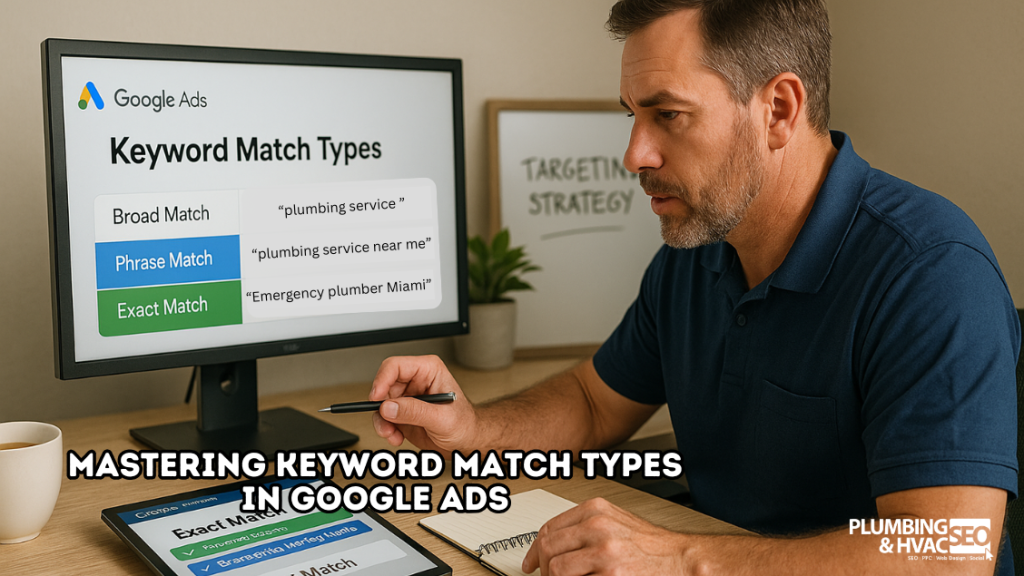
Broad match is the default option in Google Ads, and it casts the widest net. If you target the keyword “plumber,” your ad might show up for searches like “how to become a plumber,” “plumber salary,” or even “toilet won’t flush.” While broad match can deliver a lot of traffic, it often lacks the intent that leads to conversions. Use it cautiously and always pair it with a robust list of negative keywords to block irrelevant searches.
Phrase Match: A Balance of Reach and Relevance
Phrase match gives you more control. When you use phrase match (written as “plumber near me”), your ad will show only when the search includes that exact phrase or close variations, possibly with words before or after. For example, your ad could appear for “best plumber near me” or “emergency plumber near me now.” It’s a smart choice for most service businesses because it targets relevant searches without being too restrictive.
Exact Match: Laser-Focused Targeting
Exact match offers the highest level of precision. When you use exact match ([emergency plumber Miami]), your ad only shows when the user types in that exact phrase or a very close variant. This match type delivers highly targeted traffic and is ideal for your best-performing keywords. While it won’t generate as much volume, the leads are usually higher quality and more likely to convert into paying customers.
Broad Match Modified: No Longer Available
It’s worth noting that Google retired broad match modified (BMM) in 2021. BMM used to allow for more controlled reach than broad match, but now advertisers are encouraged to use phrase match instead. If your campaigns still include BMM keywords, they’ve likely been converted to phrase match automatically—but it’s a good idea to review them for accuracy.
Use a Mix for Maximum Performance
The best campaigns don’t rely on just one match type. Start with a mix of exact and phrase match to test what delivers the best results. Once you identify high-performing keywords, you can scale them and adjust your bids. Avoid starting with broad match unless you have a strong negative keyword strategy in place and enough budget to test and refine. Always monitor your search term reports to see what actual queries are triggering your ads.
Constantly Refine and Adjust
Keyword match type strategy isn’t set-it-and-forget-it. Review your performance weekly or monthly to refine your keyword list, eliminate waste, and improve targeting. Watch for high-cost clicks that don’t convert and adjust match types accordingly. The better your targeting, the more efficient your ad spend becomes.
Want Smarter Google Ads That Actually Deliver Leads?
At Plumbing & HVAC SEO, we create and manage results-driven Google Ads campaigns for contractors that want more calls and less wasted budget. From keyword research and match type optimization to landing page design and lead tracking, we handle it all so you can focus on running your business.
📞 Want to optimize your Google Ads for better ROI?
Visit www.PlumberSEO.net to schedule your free PPC strategy session today.